 ™
™Writing an end-of-term report parents will read
The Befundo team · July 7, 2026 · 2 min read

Most end-of-term reports are three sentences of praise that could apply to any child in the room. Parents know this, which is why they skim them.
A report that gets read has one thing in it that could only be about their child.
The quick answer
- Write three sentences: one thing they can now do, one thing they're working on, and one thing you noticed about them.
- Write notes as the term happens, not all at the end.
- On Befundo, a note goes on the student's page. Members, then the student, then Add a note.
- The family reads it under Report in the class, and is notified when you add one.
The shape that works
One thing they can now do that they couldn't in September. Concrete: "can hold a plank for thirty seconds", or "has stopped counting up from C every time".
One thing they're working on. Not a criticism, a next step. Parents are far less fragile about this than providers expect, as long as it's specific and comes with a direction.
One thing you noticed about them as a person. This is the line that gets forwarded to grandparents. It also proves you were paying attention.
That's three sentences, and about four minutes a child if you make notes as you go.
Write it on Befundo
- Open the class and go to Members.
- Choose the student. Their page shows their attendance and their work.
- Under Notes, press Add a note, write it, and press Save.
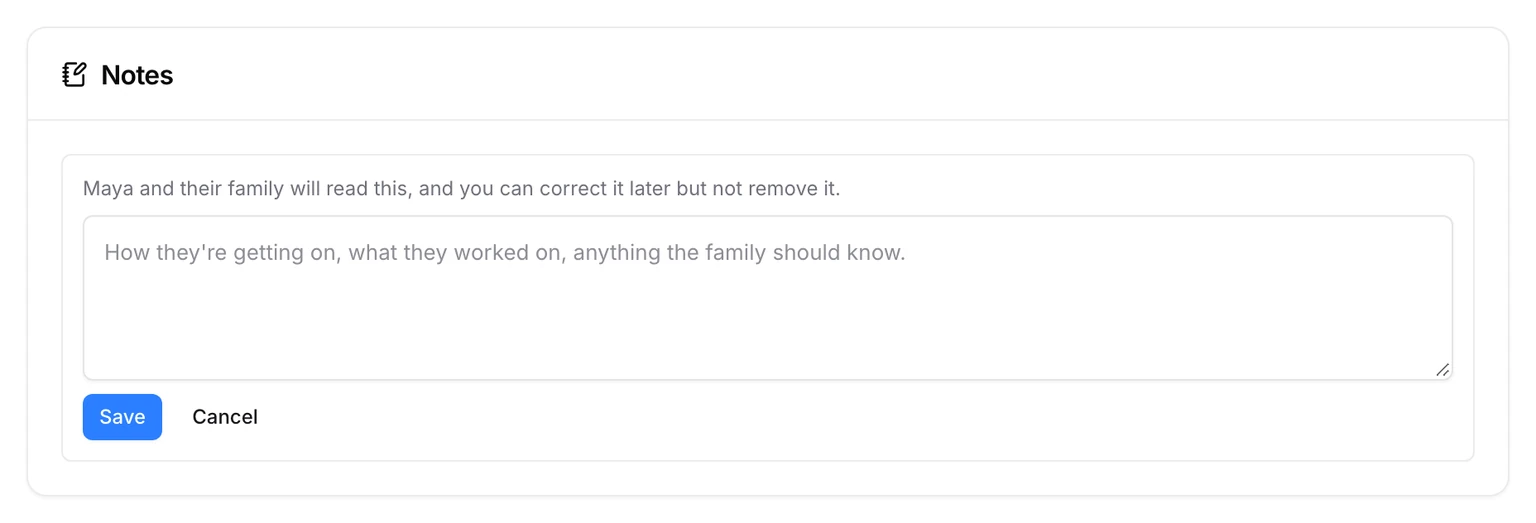
The family is notified and reads it under Report in the class's menu, and on their child's Progress page. Your child and their parents read it. Other families never do.
A note can be corrected later but not removed. Write it as something you're happy to stand behind.
The trap
Writing them all in one sitting at the end of the term is how you end up with praise that could apply to anybody. Whatever you use, make the notes while the term is happening: a line after a session, when something happened worth remembering.
If you can't write a specific sentence about a child, that's information too. It usually means they're quiet, and quiet children are the ones most likely to drift away without anybody noticing.
Write the first one
Open a class, go to Members, choose a student, and press Add a note.